Why teachers matter: an interview with Jari Kinaret
Jari Kinaret, Executive Director of the Chips Joint Undertaking, explains a microchip as fancy sand and remembers the teacher who brought him maths problems from the university.
The Curious Crew
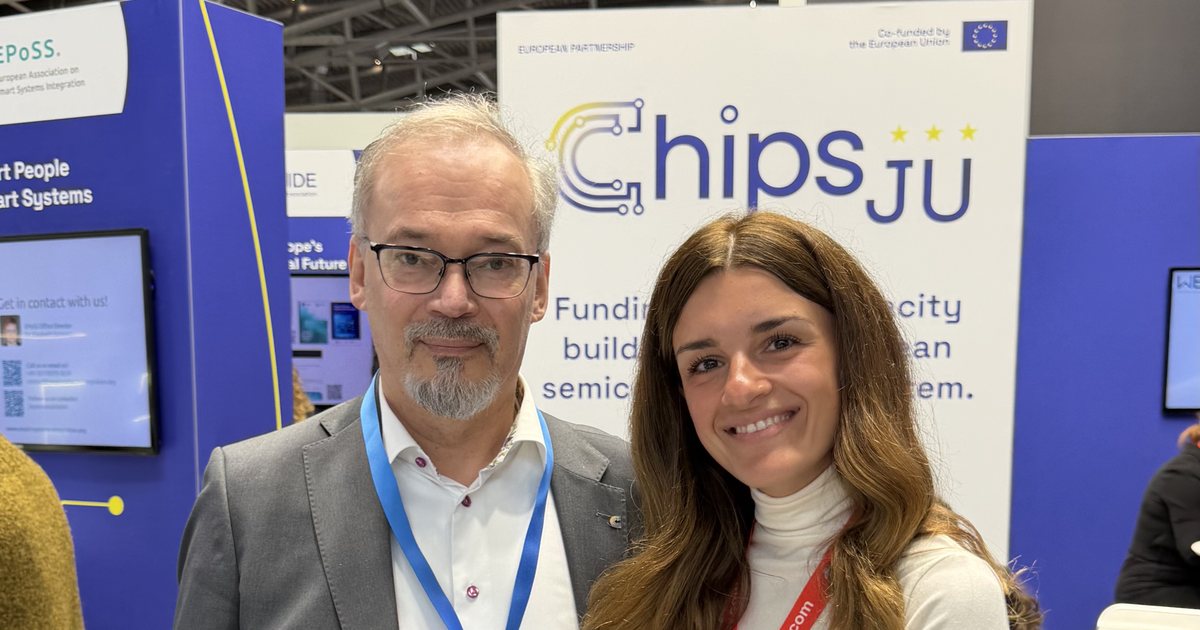
At SEMICON Europa in Munich, Nina spoke with Jari Kinaret, Executive Director of the Chips Joint Undertaking. She asked him to explain a microchip to a six-year-old, and who set him on the way to science. Part of the answer was a teacher.
Fancy sand
For Jari, a microchip is “fancy sand.” You start with sand, make small discs out of it and paint very small structures on them. Shrink a train to the width of a human hair, he said, then shrink it as much again, and you reach the size of what gets painted. Different paints make the sand work in different ways, so a chip can become very good at calculating.
Chips are in phones and video games, and a family car, he said, probably has 3,000 different chips that keep it running. Children can try the painting step in our Curiosity Lab, where light prints a drawing onto a chip.
The teacher who went further
Jari found out at school that he was good at maths, and by the age of eight or nine he wanted to become a professor of mathematics. “Didn’t quite happen, but almost,” he said. He became a professor of physics.
His father helped first and trained him a lot. When he was older, he had a teacher “who went above and beyond the call of duty.” Jari had already solved the high school problems, so the teacher brought him maths problems from the university.
“Teachers are very important factors in our lives,” Jari said.
Why it matters to us
Jari’s teacher saw what he could already do and found him the next problem. A story can raise a question, and a teacher can take it further. The Curious Crew books comes with a learning app and some include ready-to-use material for teachers, and our next project, From story to classroom, is being made with Infineon, European Schoolnet and Scientix for classrooms across Europe.
Jari Kinaret is the Executive Director of the Chips Joint Undertaking. A professor of physics, he led the Graphene Flagship.