What Schools Get Wrong About STEM - And How to Fix It
STEM education should not begin with formulas. It should begin with questions. Here is why the curiosity-first approach changes everything.
The Curious Crew
STEM education has become a priority in schools around the world and for good reason. The future demands scientific literacy, technological fluency, and the ability to solve complex problems. But there is a problem with how we are teaching it.
The Formula-First Problem
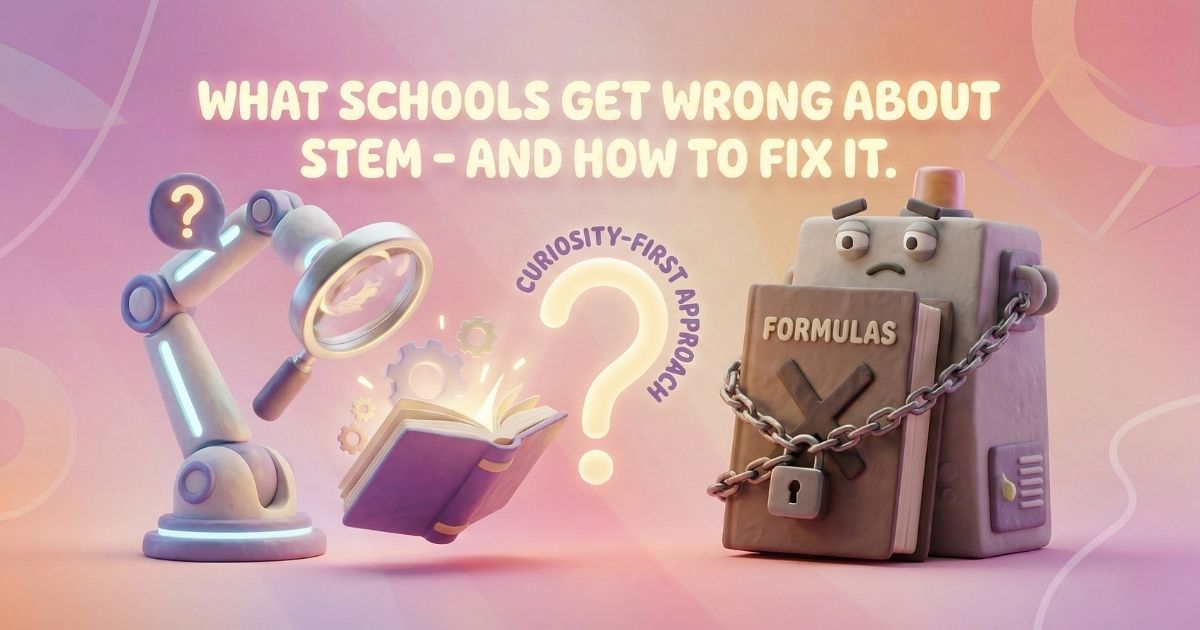
Too often, STEM education starts with the answer: the formula, the equation, the "right way" to solve a problem. Children are taught to follow procedures rather than to ask why those procedures exist in the first place.
This approach produces students who can pass tests but struggle to apply knowledge creatively. It teaches compliance, not curiosity.
A Curiosity-First Alternative
What if STEM began with wonder instead of worksheets? What if children encountered a real-world phenomenon - why leaves change colour, how bridges stay up, what makes ice cream freeze - and were invited to investigate before being given any answers?
This is the approach The Curious Crew champions: curiosity before curriculum, questions before content. We explore this further in our article on innovative teaching methods for STEM.
Real-World Examples
In one partner school, teachers replaced their first chemistry lesson with a simple question: "Why does bread rise?" Students spent an entire session hypothesising, testing ideas, and observing - without a single textbook. The result? Higher engagement, deeper understanding, and a genuine desire to learn more.
What Parents and Educators Can Do
- Start with phenomena - show before you explain.
- Embrace "messy" learning - real science is not linear.
- Connect STEM to stories - context makes content stick. Learn more about how stories teach children to think.
- Value questions as much as answers - the best scientists are the most curious.