STEM Sets and Early Learning: Why Hands-On Education Matters More Than You Think
STEM sets like LEGO STEM kits give children a powerful head start. Explore why hands-on STEM education in early childhood builds lifelong skills and how The Curious Crew supports families and organisations.
The Curious Crew
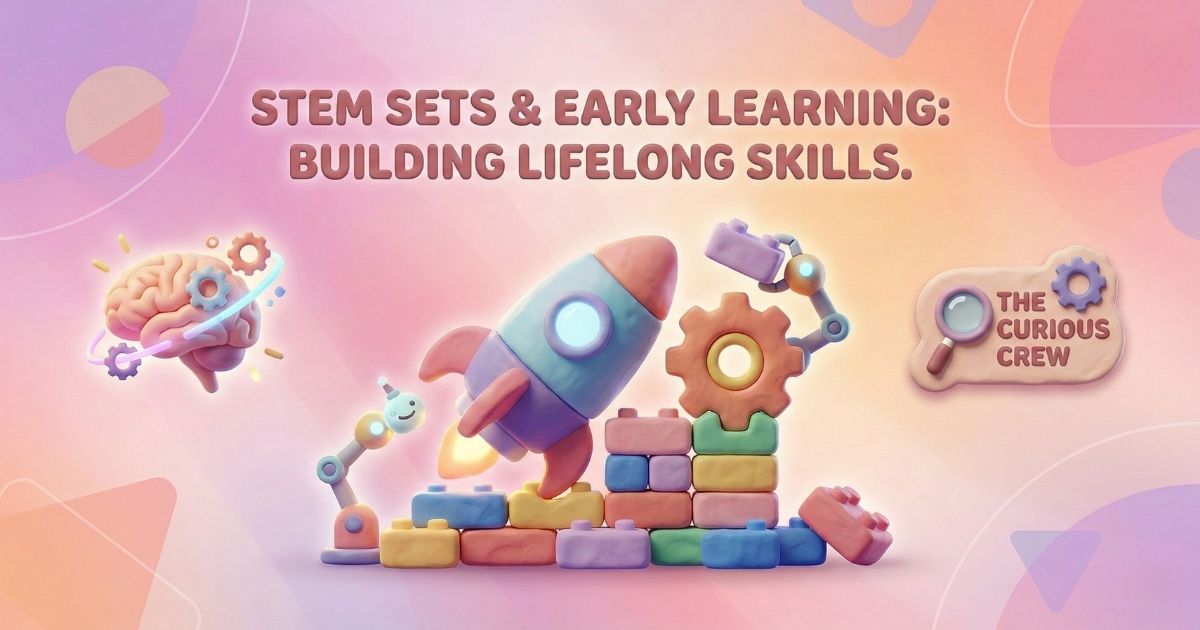
Walk into any room where a child is building something, a tower, a bridge, a spaceship made from kitchen chairs, and you are watching STEM education in action. Long before children encounter formal science lessons, they are already experimenting with gravity, testing structural integrity, and problem-solving their way through creative challenges.
The question is not whether children are ready for education in STEM. They already are. The question is whether we are giving them the right tools to keep that momentum going.
Why Early STEM Education Matters
Research consistently shows that the foundations of scientific and mathematical thinking are laid down in the earliest years of life. A landmark report by the National Academies of Sciences, Engineering, and Medicine (2022) concluded that children in preschool and elementary school are capable of learning sophisticated science and engineering concepts, and that building a solid foundation in these years sustains enthusiasm and establishes the knowledge needed for more challenging topics later.
This is not about turning toddlers into engineers. It is about recognising that the curiosity, questioning, and hands-on experimentation children naturally engage in is STEM and education at its most authentic. When we support it early, the effects compound over a lifetime.
The Power of STEM Sets: Learning by Building
STEM sets have become one of the most popular ways for parents and educators to bring structured, hands-on learning into everyday life. And for good reason: they work.
Among the most widely recognised are LEGO STEM sets. Products like LEGO Education and LEGO STEM kits are specifically designed to introduce children to engineering principles, mechanical systems, and coding concepts through guided building projects. LEGO STEM education programmes are now used in classrooms around the world, from primary schools to after-school STEM programs.
What makes LEGO for STEM so effective? It combines several evidence-based learning principles:
- Active construction: Children learn by doing, not just watching or listening.
- Iterative design: Building, testing, failing, and rebuilding mirrors the real engineering process.
- Open-ended exploration: The best stem lego sets encourage children to go beyond the instructions and create something entirely new.
- Social interaction: Working together on a build develops teamwork and communication skills.
The LEGO Foundation's research on learning through play reinforces this approach, showing that playful learning experiences that are joyful, meaningful, actively engaging, iterative, and socially interactive are where children develop their strongest cognitive and social skills.
Beyond LEGO: The Wider World of STEM Sets
While legos and stem have become almost synonymous in many households, the world of STEM sets is broader than any single brand. Science experiment kits, coding robots, magnetic building tiles, circuit boards for children, and nature exploration sets all fall under the umbrella of hands-on STEM science technology learning tools.
What all good STEM sets share is a common design philosophy: they place the child in charge of their own learning. Rather than delivering information passively, they create conditions where children must hypothesise, test, observe, and draw conclusions, the fundamental steps of the scientific method, all disguised as play.
What Makes STEM Programs Effective
Not all STEM programs are created equal. The most effective ones share certain characteristics, whether they take the form of classroom curricula, after-school clubs, or home learning kits:
- They start with questions, not answers. Effective stem education begins with genuine curiosity. "What happens if we change this?" is a more powerful starting point than a worksheet.
- They connect to real life. Children engage more deeply when they can see how STEM science technology connects to the world they experience every day, from how bridges stand up to why ice cream melts.
- They embrace failure. The iterative process of building, testing, and improving is where real learning happens. Stem with LEGO projects, for example, often work best when the first attempt collapses, because rebuilding requires deeper thinking.
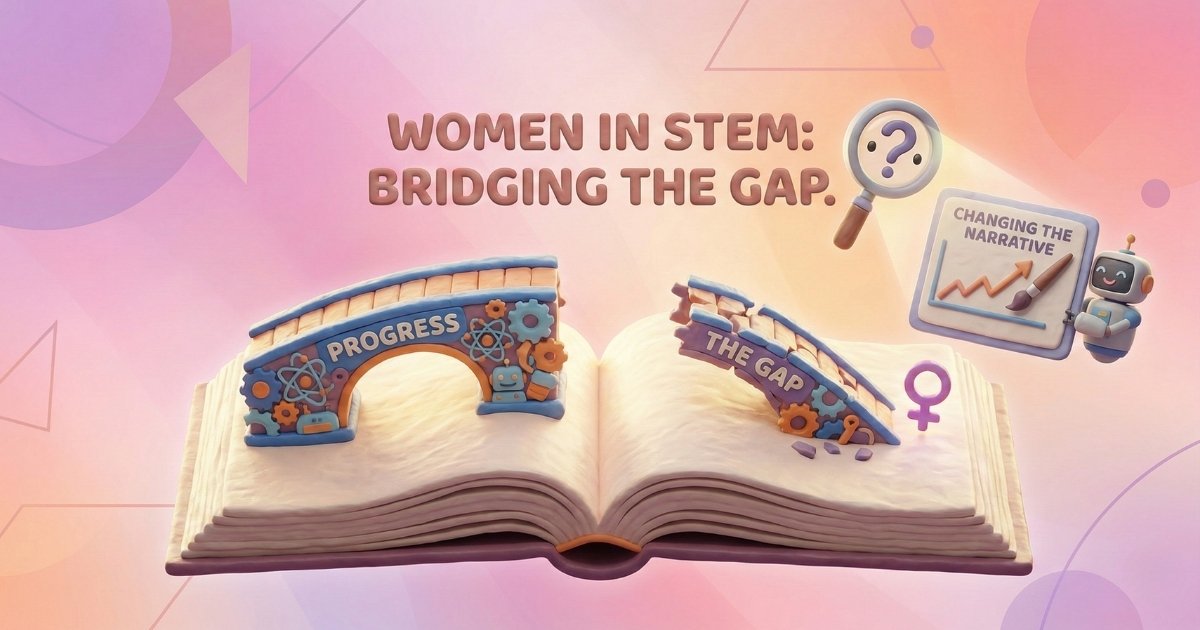
- They are inclusive. The best programmes ensure that every child, regardless of gender, background, or ability, gains access to the same quality of experience and encouragement. Read our article on women in STEM and why representation matters.
The National Academies (2022) report emphasises that effective early science instruction requires teachers and facilitators who can create learning environments where children's ideas, interests, and practices are treated as meaningful not just for school, but for their lives.
How The Curious Crew Approaches STEM Education
At The Curious Crew, we believe the best STEM education starts with a story.
Our books are designed with a STEM-first philosophy. Each story introduces children to scientific concepts, engineering challenges, or mathematical thinking through characters who model curiosity, experimentation, and resilience. Rather than telling children what to think, our narratives invite them to question, predict, and explore alongside the characters.
This is education in STEM that meets children where they are: in the world of wonder, imagination, and play.
For Families and Individuals
Our books are available for parents, caregivers, and educators who want to bring more curiosity-driven STEM and education into everyday life. Each book comes with built-in conversation starters and activities that extend the story into hands-on exploration, naturally complementing STEM sets and building kits you may already have at home.
Pairing a Curious Crew book with a LEGO STEM set, a science kit, or even materials from around the house creates a complete learning experience: story sparks curiosity, and hands-on activity deepens understanding.
For Companies and Organisations
We also collaborate with companies, schools, libraries, and institutions to provide tailored STEM learning solutions. Whether you are a brand looking for an educational partnership, a school seeking curriculum-aligned resources, or an organisation running STEM programs for young people, The Curious Crew works with you to develop bespoke content that fits your audience and objectives.
Our corporate partnerships include:
- Custom-branded books and content designed around your organisation's values and educational goals.
- Tailored workshop materials for events, conferences, and community outreach.
- Curriculum-aligned STEM resources for schools and educational institutions.
- Co-developed programmes that integrate storytelling with hands-on stem education activities.
If you are a company that values education in STEM and wants to make a genuine impact on young learners, we would love to hear from you. Get in touch to discuss how we can work together.
Practical Tips: Getting the Most from STEM Sets at Home
Whether you are working with LEGO STEM kits, science experiment sets, or simple materials from around the kitchen, here are evidence-based ways to maximise the learning:
- Ask open-ended questions: Instead of "follow the instructions," try "what do you think will happen if you change this piece?"
- Resist the urge to fix: Let children struggle, iterate, and find their own solutions. The learning is in the process, not the finished product.
- Connect building to stories: After a build, ask your child to tell you the story of what they made. Who lives there? What does it do? This integrates literacy with STEM science technology thinking.
- Celebrate questions, not just results: When a child asks "why does this not stand up?" they are doing engineering. Acknowledge it. This is also why curiosity matters more than grades.
- Make it social: Build together. The conversation that happens during shared building is one of the most powerful learning moments available.
The Bigger Picture: Why This Investment Matters
Every LEGO STEM set assembled, every science experiment completed, and every story that sparks a new question contributes to something larger: a generation of children who see themselves as capable thinkers, builders, and problem-solvers.
We know from research that early, positive experiences with STEM science technology shape long-term attitudes toward learning. Children who build confidence in asking questions and testing ideas in their early years are far more likely to pursue stem education pathways later, not because they were pushed, but because they discovered that science is something they genuinely enjoy.
At The Curious Crew, we are committed to making that discovery possible for every child, through the stories we create, the partnerships we build, and the curiosity we champion. Because the best time to start is now.