Bedtime Stories and Sleep: Why Rest Matters More Than You Think for Children and Adults
Sleep shapes how children grow, learn, and regulate emotions. Discover why bedtime stories are one of the most powerful tools parents have, and why adults need quality rest just as much.
The Curious Crew
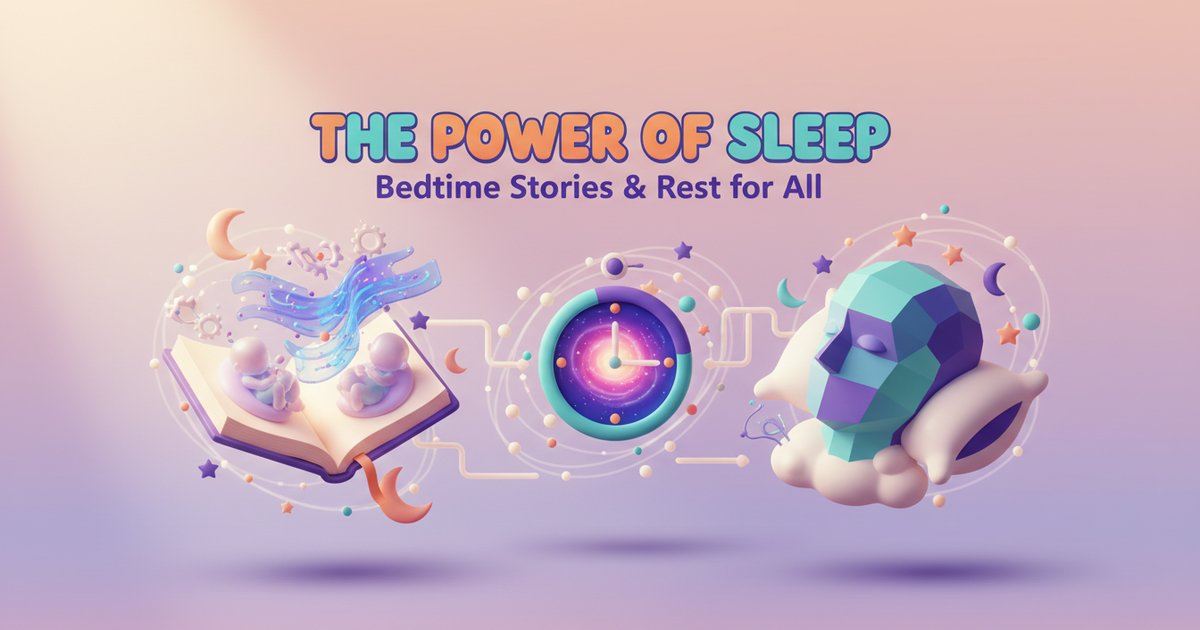
Every parent knows the scene. The lights are dimmed, the room is quiet, and a child is tucked in, waiting for the familiar words: "Once upon a time…" Bed time stories are one of the oldest rituals in family life, and they exist for a reason far deeper than entertainment. They are one of the most effective ways to help a child transition from the stimulation of the day into the calm of sleep.
But here is what many parents do not realise: the story is not just helping the child fall asleep. It is building their brain, strengthening your bond, and laying the foundation for lifelong healthy sleep habits. Discover how stories teach children to think, not just to listen. And those habits matter not only for children but for every adult in the household too.
The Science of Sleep: Why Children Need It More Than Anything
Sleep is not a passive state. It is one of the most active and vital processes in a child's development. During sleep, the brain consolidates memories, processes emotions, and physically grows. Experts recommend that children aged 3-5 need 10-13 hours of sleep per day, while children aged 6-12 need 9-12 hours.
When children consistently get enough sleep, the benefits are profound:
- Cognitive development: Sleep is when the brain transfers short-term memories into long-term knowledge. A well-rested child learns faster and retains more.
- Emotional regulation: Sleep-deprived children are more prone to mood swings, anxiety, and difficulty managing frustration. Adequate rest builds emotional resilience.
- Physical growth: Growth hormone is primarily released during deep sleep. Children literally grow while they rest.
- Immune function: During sleep, the immune system produces proteins called cytokines that help fight infection and inflammation. A child who sleeps well gets sick less often.
A study published in SLEEP (2014) found that children with consistent bedtime routines, including story bedtime stories, showed significantly better sleep quality, longer sleep duration, and fewer night-time awakenings compared to children without structured routines.
Why Bedtime Stories Are More Than a Routine
A bed times story is not just a pleasant habit. It is a scientifically supported intervention that affects multiple dimensions of a child's development simultaneously.
Language and Literacy
Research from the American Academy of Pediatrics' literacy promotion programme shows that children who are read to regularly from an early age develop larger vocabularies, stronger comprehension skills, and greater readiness for school. Bedtime stories offer a consistent, daily opportunity for this language exposure, delivered in a calm, focused environment where children are most receptive.
Emotional Bonding and Security
The physical closeness of reading together, a parent's voice, the warmth of a shared moment, activates the child's attachment system. This sense of safety is directly linked to better sleep. Children who feel secure fall asleep faster and sleep more deeply. Bedtime stories repeated each night create a predictable, reassuring signal that tells the child's nervous system: "You are safe. It is time to rest."
Cognitive Wind-Down
Screens stimulate. Stories soothe. Unlike digital media, which activates the brain's alertness systems with blue light and rapid visual changes, a spoken or read story gently engages the imagination without overstimulating the nervous system. This makes bed time stories one of the most effective screen-free transitions to sleep.
What Happens Inside the Body During Sleep
Understanding what happens during sleep can help both children and adults appreciate why it matters so much. Sleep is not a single state but a cycle of distinct stages, each serving a different purpose:
- Light sleep (Stage 1-2): The body begins to relax. Heart rate slows, muscles loosen, and brain waves start to decelerate.
- Deep sleep (Stage 3): This is the most restorative phase. The body repairs tissues, builds bone and muscle, and strengthens the immune system. Growth hormone surges through a child's body during this stage.
- REM sleep (Stage 4): The brain becomes highly active, processing emotions and consolidating learning. This is when dreams occur and where creativity and problem-solving are enhanced.
Children spend significantly more time in deep sleep and REM sleep than adults do, which is why disrupted or insufficient sleep has an outsized impact on their development. Every hour of missed sleep matters more for a growing brain.
Good Night Stories for Every Kind of Child
Not every child responds to the same kind of story at bedtime. Some children love fantasy and adventure, while others prefer stories rooted in the real world. Some want humour, others want calm. The best bedtime reading approaches meet the child where they are.
Good night stories for rebel minds, children who question everything, resist routine, and want to understand why they have to sleep at all, deserve a special mention. These are the children who benefit most from stories that do not just lull them to sleep but actually explain what sleep does. When a curious child understands that their brain is busy organising everything they learned that day, or that their immune system is fighting off germs while they rest, sleep transforms from a boring obligation into something genuinely fascinating.
This is exactly the approach behind Explore Sleep: A Journey Through the Night, a Curious Crew story that takes children inside the science of sleep. Rather than telling children to close their eyes, the story invites them to discover what happens after they do. It is a bed times story designed for the child who always asks "but why?"
Why Adults Need Sleep Just as Much
While this article focuses on children, it would be incomplete without acknowledging that adults face a sleep crisis of their own. Insufficient sleep is widely recognised as a public health concern. Adults who regularly sleep fewer than seven hours per night face increased risks of cardiovascular disease, obesity, depression, and impaired cognitive function.
For parents specifically, the irony is acute: the very people responsible for establishing healthy sleep habits for their children are often the most sleep-deprived adults in the household. Studies show that sleep-deprived parents are less patient, less emotionally available, and less effective at maintaining consistent bedtime routines.
This creates a vicious cycle: tired parents struggle to maintain routines, children sleep poorly, and everyone suffers. Breaking this cycle starts with recognising that the bedtime routine is not just for the child. It is for the whole family.
Practical Sleep Tips for Adults
- Maintain a consistent schedule: Go to bed and wake up at the same time every day, even on weekends.
- Create a wind-down ritual: Just as children benefit from bedtime stories, adults benefit from a predictable pre-sleep routine: reading, stretching, or a warm drink.
- Limit screens before bed: Blue light from phones and laptops suppresses melatonin production. Set a screen curfew at least 30 minutes before sleep.
- Optimise the environment: Cool, dark, and quiet. These three conditions support the deepest, most restorative sleep.
- Model good sleep behaviour: Children learn from what they see. When parents prioritise sleep openly, children absorb the message that rest is valuable, not optional.
Building a Bedtime Routine That Works
The most effective bedtime routines share certain characteristics, whether the child is three or thirteen:
- Predictability: The same sequence of events each night signals to the brain that sleep is approaching. Bath, pyjamas, teeth, story, lights out. The order matters more than the specific activities.
- Consistent timing: The body's circadian rhythm thrives on regularity. A bedtime that varies by more than 30 minutes from night to night can disrupt sleep quality significantly.
- A story as the centrepiece: Story bedtime stories serve as the emotional anchor of the routine. They give the child something to look forward to and provide a natural transition from activity to rest.
- Connection before separation: Bedtime is a moment of temporary separation. A story read together provides the connection and reassurance that makes that separation feel safe.
Choosing the Right Bedtime Stories
Not all stories are equally suited to bedtime. The ideal bedtime stories for sleep share these qualities:
- Calm pacing: Avoid stories with high-action climaxes right before the ending. Gentle, winding narratives are more effective.
- Warm tone: Stories that feel safe, warm, and reassuring help the nervous system relax.
- Curiosity, not anxiety: The best stories spark gentle wonder rather than suspense. A child who is curious about what happens inside their body during sleep is engaged without being overstimulated.
- Conversation starters: Stories that invite a brief, quiet reflection ("What do you think your brain will work on tonight?") create meaningful moments of connection that deepen the bedtime ritual. For more ideas, see our conversation starters for curious families.
At The Curious Crew, our books are designed with exactly this philosophy. Explore Sleep: A Journey Through the Night follows two characters, Sofia and Mr. Tie, as they discover how the immune system protects and repairs the body during rest. It is a story that transforms the question "Why do I have to go to sleep?" into "What amazing things will happen while I'm sleeping?". The kind of good night stories for rebel thinkers who need a reason, not just a rule.
The Long-Term Impact of Good Sleep Habits
Children who develop healthy sleep patterns early carry those habits into adolescence and adulthood. The National Sleep Foundation's Sleep Health journal has published research showing that bedtime routines established in early childhood predict better sleep quality, fewer behavioural problems, and stronger academic performance years later.
Conversely, chronic sleep deprivation in childhood is associated with higher rates of obesity, attention difficulties, and mental health challenges in later life. The investment in a consistent, story-rich bedtime routine is not just about tonight. It is about building a foundation that supports a child's wellbeing for decades.
What Parents and Educators Can Do Today
- Start tonight: If you do not already have a bedtime story routine, begin with one story, one night. Consistency will build naturally.
- Choose stories that educate and soothe: Look for bed time stories that combine gentle narrative with genuine learning. Children who understand why sleep matters are more willing to embrace it.
- Talk about sleep positively: Instead of "You have to go to bed now," try "Your body has some amazing work to do tonight. Let's read about it."
- Protect the routine: Treat bedtime with the same priority as meals and school. It is not negotiable, but it can be enjoyable.
- Take care of your own sleep: You cannot pour from an empty cup. A well-rested parent is a more patient, present, and effective parent.